Socializing cats is one of the most important stages in a cat's life, especially in its first days and weeks. It is precisely then that its reactions to the world, to people and to other animals take shape.
Proper socialization translates into a sense of security, ease of adaptation in new situations and healthy relationships with caregivers.
In our cattery we attach enormous importance to this – because even the most beautiful cat will not be happy (nor will it make a new family happy) if it is not prepared beforehand for life in a human home.
When does the socialization of cats begin?
The socialization process begins in the very first days and weeks of life, and its most intense period falls in the time between the 2nd and 10th week. It is then that the kitten soaks up stimuli like a sponge – and its later behaviour depends on what it gets to know and gets used to then.
That is why it is so important, where and with whom the kitten spends this time. It is not a stage that can be „made up for” after adoption – it is something that is built daily in the cattery from the very beginning.
Key elements of good socialization
Below we present the 7 elements of cat socialisation that we consider key. We describe why they are important, and how we – at Kotki Kędziorki*PL – try to put them into practice.
1. Contact with people👨👩👧👦
Daily contact with people is the foundation – stroking, carrying, talking to the kittens, the presence of children and adults make the cat not afraid of people and easily builds a bond with its future family.
It gets to know different types of behavior and learns that human presence is something positive.
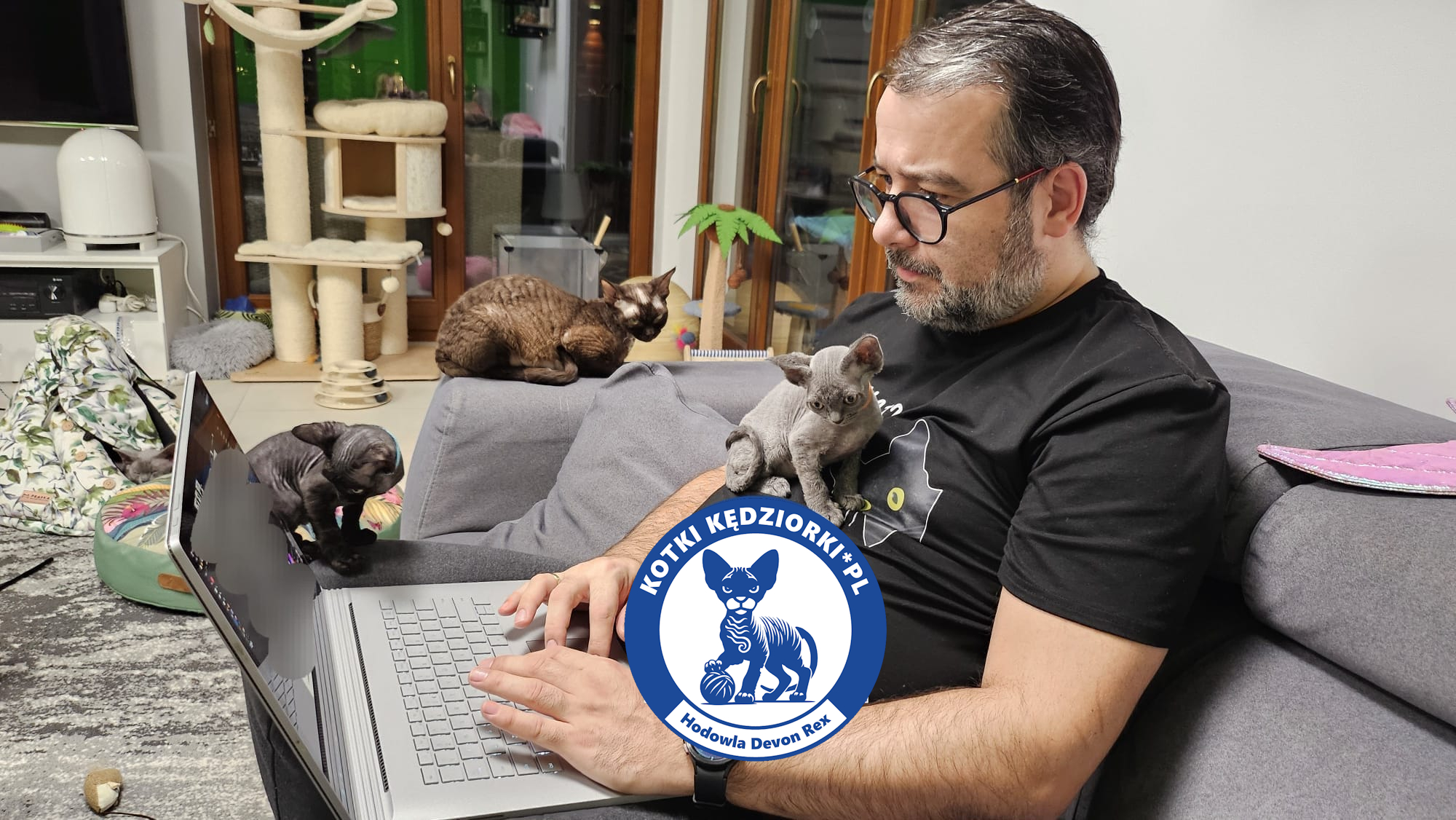
In our cattery the kittens have daily contact with the household – we are with them, we stroke them, we talk to them from the first days of life. They have contact both with adults and with our children. After vaccination they also have contact with other people visiting us.
2. Contact with other cats🐱
Equally important is the possibility of contact with the mother, siblings and other adult cats. Thanks to this the kitten learns cat language, appropriate grading of force during play, communication, self-control and boundaries.
A lack of contact with other cats at a young age can lead to later behavioural problems and aggression.
With us the kittens are in the „nursery” (a place/room dedicated to them) for about 4 weeks – then they have contact with their mother and with us. After that time we move them to the „kindergarten”, where they already have contact with our other adult cats or other litters.
3. Exploring the home🏡
A kitten should have the possibility of safely getting to know various rooms, surfaces (including various textures), places to hide and to climb.
Thanks to this develops curiosity, self-confidence and copes well in a new home, without excessive stress.
Our aforementioned „nursery” is in our living room – the central place of the house, where they are initially enclosed in a large pen. But later (around 6-8 weeks) they can already freely explore the whole house (including taking walks upstairs, or freely coming up to us while we work from home).
4. Exposure to sounds and situations🔊
A well-socialised kitten knows various sounds: the intercom, the vacuum cleaner, the blender, the sounds of conversations, music, the television, street traffic, nature. Thanks to this does not panic in normal home situations and copes more easily with changes of surroundings.
From an early age we get the little ones used to the vacuum cleaner, the hairdryer, the sounds of the kitchen and everyday life. Thanks to this they are not fearful later. Because we also have a large glazed terrace, our kittens also learn contact with nature in a safe way.
5. Learning basic habits🎯
Already in the cattery a kitten should learn:
using the litter box,
eating solid food,
using the scratching post,
the basic rules of life in a home.
This all facilitates later adaptation in the new environment and reduces stress.
We teach our kittens all of this, so when you collect them (around 15-16 weeks) they can already use the litter box, eat wet and dry food, use the scratching post.
6. Responding to behaviors🧠
Some kitten behaviours – such as biting, scratching people or excessive caution – can be gently corrected from the earliest weeks.
The breeder's role is to react appropriately and support proper emotional development.
We ourselves take care of these elements (e.g. we try not to play with our hands with the cats, so that they don't then attack them) and we pass this knowledge on to new families too. Here, however, you have to be aware that every kitten has its own temperament and certain traits may emerge later, also due to the change of home.
7. Preparing to work with the veterinarian 🏥
It is worth getting the kitten used to:
touching the paws, head and muzzle,
being carried in the carrier,
trimming the claws,
a calm examination.
This makes it so that a visit to the vet is not a drama, and the cat tolerates procedures and diagnostics better.
We cooperate with the fantastic 24-hour Redline clinic, which has excellent specialists who love animals. We try to make visits there short, low-stress and without bad memories. We trim the little ones' claws from their very first days, and we can teach new parents this too.
❤️ Why is this so important?
A well-socialized cat is:
🧘♀️ calmer and more self-confident in a new home, 👪 easier in contact with household members (including children), 🧳 coping better with travel and changes, 😻 happier, because it is able to form bonds.
Socialization is an investment in the future of the cat and its family. What we do in these first weeks pays off throughout its whole life.
⭐ Socialization at our place
In our cattery Kotki Kędziorki*PL, socialization is an absolute priority. We wrote a few examples above (in italics) how we implement these elements in our cattery.
The kittens are raised in our home, are part of everyday life and from an early age learn:
contact with people and other cats,
new sounds and situations,
the rules of living with a human.
Thanks to this they arrive at their homes as cats that are curious about the world, brave and ready for adventure – not only beautiful, but above all well prepared for life with a human.
Interested in a Devon Rex?
If you are interested in a Devon Rex kitten from our cattery, then:
You can also follow us on Facebook, Instagram and TikTok – we also regularly publish lots of photos, videos, and information there. Like and follow our profiles to stay up to date with what’s happening with us 🙂
Find out why Devon Rexes feel best as a duo! Discover 6 reasons why it is worth buying two cats of this breed – for their happiness, health and your peace of mind.
Devon Rexes are wonderful cats, as we say and write time and again. More and more of them are also appearing in interesting media coverage. On this page we want to gather a few interesting materials (it will be updated if something new and interesting comes up) about our breed. Here you'll find recordings (from traditional and online media) in which […] featured