Cat shopping – what does a cat need? The essentials!
On the website Buying a cat we described basic equipment needed to host the kitten in its new home. We also wrote what you will get from us after purchase as part of the so-called starter kit.
But in connection with many detailed questions, we described below what we use ourselves day to day in our cattery, together with links to shops where we buy certain things.
We have also added several other answers to the most frequently arising questions – thanks to this you should be better prepared for a new kitten!
Shopping with a 10% discount at zooplus.pl
Before we show the things we use, we wanted to tell and show you the online shop where we ourselves buy a great many things for our little cats.
zooplus.pl is the largest online pet shop in Europe. Delivery is about 2-3 days, and for orders over 99 PLN shipping is free. You can pay by fast transfer (including Blik), ordinary transfer, on delivery or by credit card.
And for our new kitten owners (who are not yet zooplus.pl customers) we have a special offer. After clicking on the link below, after registering in the shop and with your first purchases you will receive as much as 10% discount on any products.
It is a good opportunity to to make the first purchases to welcome the new kitten!
And now we invite you below to get acquainted with our suggestions and proposals regarding cat purchases – both the first ones and the later regular ones*.
And on top of that a few additional chapters about: vaccinations and visits to the vet, leaving a cat home alone or household hazards for cats and the cat's first days in a new home.
* To be 100% transparent – the links below directing to the shop zooplus.pl are affiliate links. For you there is no difference at all, whereas in return for recommending the products we receive a small commission. However, as we mentioned – these are products tested by us, which we own ourselves or buy regularly.
Litter box
The litter box is one of the basic places where a cat spends time 🙂 In our cattery we permanently have 6 adult cats + small kittens. In our case we have 6 different litter boxes used every day (and 8 when the little ones are born).
But usually in a new place (even if some other cat already lives in it) one litter box may be sufficient (although this does not always succeed).
Litter boxes can be open (accessible from every side). There are also litter boxes closed (with one entrance opening or additionally with a movable flap door). There can also be built-in litter boxes (e.g. in a cabinet). A lot depends on the preferences of the given cat and our housing possibilities.
The litter boxes we use are:
A covered litter box with a door: Curver The cost is around PLN 170. It looks nice (it comes in two colours), has a comfortable handle, and you can remove its cover and use it as an open litter box. You can also remove the little door. The litter box has a built-in litter scoop and a carbon filter (for suppressing odours). It has a conveniently pull-out litter container.
A large open litter box: DIY (Do It Yourself / Do it yourself) Made by ourselves, custom-sized, from plexiglass (glued into the shape of a cube, without a top wall and with a lowered front wall). It was used inside a kitchen cabinet with a hole cut for the cats. We mention it so you know you can also make it yourself (or with the help of a company that makes plexiglass items) and adapt it to your house/flat, and it may suit the cats too.
Automatic litter box: Cat Genie 120+ The cost is around PLN 2500. The advantage of this litter box is its connection to the plumbing (water and drainage), thanks to which it is practically 100% automatic. The only thing you have to do is top up the litter (here, unfortunately, a dedicated one, quite expensive) and replace the washing cartridges (also quite expensive). The litter is rinsed inside it and dried with hot air. Note: because of this drying it can have an intense smell in small rooms.
Automatic litter box: Petkit Pura X (x2) The cost is around PLN 1600. This litter box is a little less automatic, because you have to remove the waste from it regularly. But it falls down into a dedicated container. You also have to top up the litter regularly – a plus here is that it can basically be any litter (more on that in a moment). Another plus is the phone app – with notifications about the waste container being full, the need to refill the litter, or also… recognising the cat (based on weight) and the ability to monitor weight. We have two such litter boxes.
Automatic litter box: Petkit Pura Max The cost is around PLN 2000. This is a very similar model to the previous one (Petkit Pura Max), but it's a newer generation and is built a little differently. It seems to be a touch bigger inside (on the outside, again, it seems a touch smaller) and has a larger waste container. But the whole operation and handling looks like the one described above. This is the litter box we would recommend for someone who would like to try automatic ones.
Automatic litter box: Petkit Purobot Max Pro The cost is about 2800 PLN. It is a model with a camera inside, which can analyse and recognise cats, can analyse their behaviours, etc.
Litter
In each of these litter boxes we use corn litter (apart from the automatic Cat Genie 120+ litter box, where the manufacturer's dedicated synthetic litter is needed).
In our opinion this is the best litter for cats. Very good at clumping, low dust, ecological, theoretically flushable down the toilet*. In addition it is very soft, and harmless for small kittens even if they were to eat it (the little ones sometimes do that).
We ourselves use the litter Benek Corn Cat, which can be bought in packages of various sizes and scents. We most often buy the classic (unscented) one in large 35l packages (we have room to store them).
Besides that, other litters worth considering are bentonite and wooden.
In one of the litter boxes we also use bentonite litter, and more specifically the kind with the addition of nano silver (as a natural antibiotic) – it is Bazyl Ag+ Compact (in the unscented version). Generally bentonite litters are the closest to what cats use outside the home (sand). However, it clumps a little worse than corn litter and also creates a bit more dust (especially the finest one).
A sensible litter can be wood litter. This too can in theory be thrown into the toilet* and creates less dust. However, cats do not always want to use it.
Note: we do NOT recommend however completely silicone litter (the transparent or coloured one) – firstly it is unpleasant for cats' paws, secondly it lets urine through (although in theory it retains it at the bottom) and has several other drawbacks.
* When it comes to throwing litter into the toilet/sewage system – we write that some litters can „theoretically” be thrown there (the manufacturer says they dissolve), but Polish law forbids throwing any litter into the toilet/sewage system.
A container for used litter
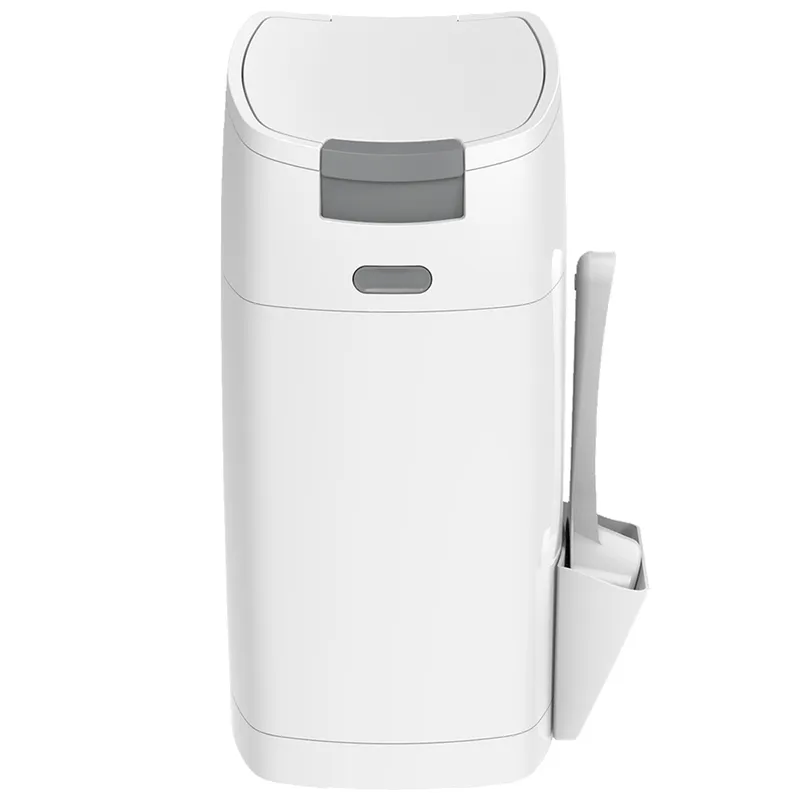
A recent fantastic discovery for us is a container for used litter. There are several models on the market, we decided on and already use two such containers – LittyCat available on zooplus.pl for about 100 PLN.
It is a fairly simple device that keeps used litter tightly sealed, consisting of a bin, a replaceable (foil) liner and a scoop. We throw the used litter into the container, it is there tightly sealed, and we can replace it e.g. once every few days (we move to the bin only that once and not every time after cleaning the litter box).
Hygienic enclosure: you have to open the bin with a button, pour in the used litter and press the button, and the litter disappears inside the container.
No unpleasant odors: the combination of a magnetic closure and a hermetic, multi-layer bag ensures freshness in the room.
Multilayer foil cable technology: locks in odors, guarantees hygiene.
Tight closure: a mechanical and magnetic locking system for double protection against odours.
Large capacity: an end to daily trips to the rubbish bin; the bin should be emptied about every 2 weeks (in the case of homes with one cat).
We buy the replaceable liners on Allegro. If you feel like it let us know, we will give tips on where and how to replace them.
Food
Cats in our cattery are fed from an early age (apart from mother's milk) with BARF food (Eng. Biologically Appropriate Raw Food), which is based on raw meat, offal and appropriately selected supplements, which together recreate the composition of the natural food of a cat predator (a mouse).
It is a diet that requires knowledge and precision – wrong proportions can lead to deficiencies or excesses. But a properly balanced BARF provides the cat with everything it needs – it is the most biologically appropriate form of feeding. Another plus is full awareness of what we give the cat (meat that we buy ourselves, practically no additives), raw meat that is very natural for a cat, and less intense litter-box smells (or even none). However, you have to spend time preparing it yourself + have knowledge about the ingredients (there are many apps you can use for this).
However, we know that this is not a form for every Carer, so we also teach the small kittens to eat high-meat food wet food (MjAMjAM and Wild Freedom) as well as premium, grain-free dry food (Farmina N&D Prime). They are high-grade, high-meat (rich in protein, of excellent absorbability and optimal digestibility), without added grains, with about 30% vegetables and fruit and rich in the omega-3 and omega-6 fatty acids essential for cats.
Read our dedicated article What and how to feed a cat, where we show what the possible options for feeding cats are.
Food bowls
For food you of course need to have bowls – there are very many different kinds of them (plastic, metal, ceramic, double, etc.).
Those most often recommended as the best and safest are ceramic or glass. They absorb odours the least, they are hypoallergenic and easy to clean. The bowls should be fairly shallow and wide (so as not to disturb the cat's whiskers), it is worth them having some rubber or felt bases so they do not slide while eating. Bowls metal should also be OK, they are hygienic and easy to clean, although they may take on odours more. The least recommended are plastic bowls, because they absorb odours and are hard to clean thoroughly, they also scratch easily (which encourages the accumulation of bacteria) and can cause allergic reactions or feline acne (around the muzzle).
For one cat it is worth having more than one bowl, because they also need to be wash regularly. So if a cat uses wet and dry food, you need to have at least 2 bowls (+ 1 for water), but optimally it would be best to have 4 bowls + 2 for water.
Changing the food
If for some reason you would like make a decision to change the food (there are various situations – financial, allergy-related, other), you have to do it gradually. First adding a small amount of the new food, and then introducing more of it each day. Until a complete switch to the new food. During this time you should observe the cat – its behaviour, skin, appetite, water drinking, faeces, etc.
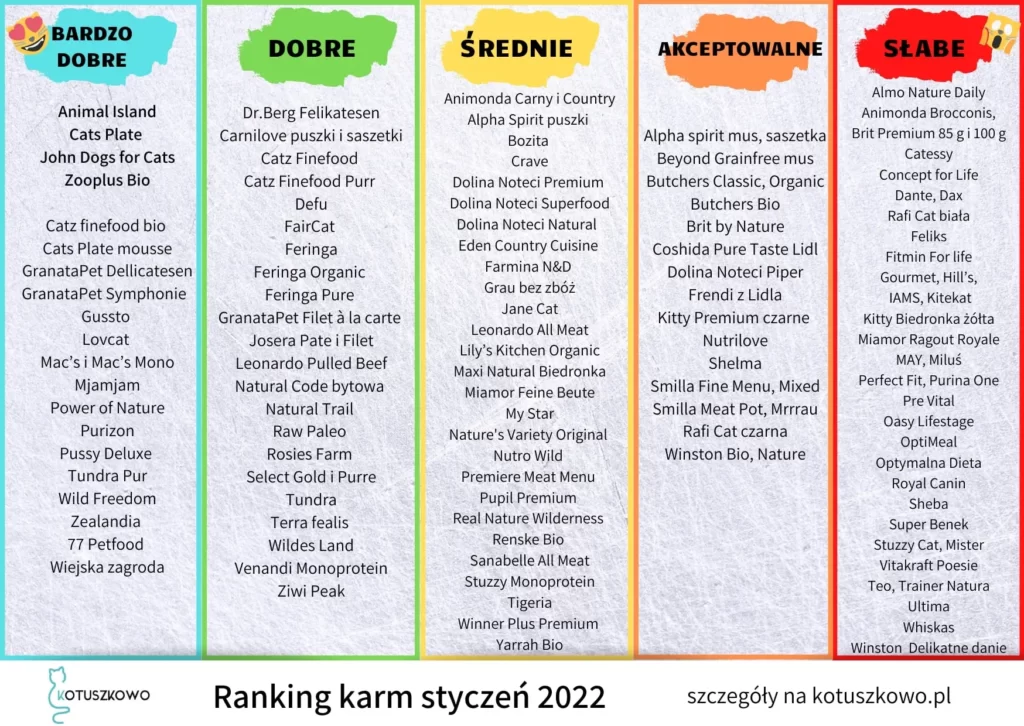
If you would like to change the wet food, then we recommend using the following comparisons of foods by their quality. As you can see, our Mjamjam food is in the category „Very good quality foods„.
Sometimes, as a backup, we also use Select Gold or Carnilove (from the category „Good-quality foods”), because these can be obtained in practically most pet shops (we have only come across Mjamjam online), and our cats also like them very much.
Wet maintenance foods for cats – with a classification of their quality.
We certainly we do NOT recommend foods popular in many stores (including supermarkets) of the Whiskas / Brit / Felix / Kitty / Sheba type, which are foods largely based on grains (with a small amount of meat), often have an unclear composition and a lot of sugar.
Here is one more good a comparison of food quality (including dry foods).
Wet and dry foods ranked by quality.
Generally, changing food is a fairly broad and at the same time deep topic. If you decide on something like this, it is worth reading more about how exactly to do it. We will recommend, for example, this a post on the Apetete blog.
Water and drinkers
Cats must always have access to water, preferably fresh or regularly replaced.
It can be an ordinary bowl, but you can also go for a water fountain – cats like to drink flowing water. However, you then have to have a power supply nearby or find a battery-powered one (e.g. with a motion sensor).
It is also important that the bowls of water and food should rather did not stand next to each other. Cats are predators that in nature try not to drink water right next to the place where they hunted. And they instinctively fear that water next to food may be contaminated and make them ill. That is why it is best to place these bowls at some distance from each other.
Our adult cats (though not all of them) like to drink water straight from the tap. We give it to them e.g. while brushing our teeth in the bathroom, or doing something in the kitchen.
Note: So well known to us from fairy tales or films milk for cats (cow's or any other) is not good for them, it can often end in diarrhoea. Let's not give them milk, really. What they were meant to drink and what was great for them, they already got from their mother in the first weeks of life.
A scratching post for the cat
The scratching post is a very important element for cats – it allows them to leave scent signals, to mark the territory as their own and (the higher ones) for comfortable observation of a larger area. Plus of course it lets them work off their claws, so that they do not do it e.g. on our furniture.
In our cattery we have several kinds of scratching posts:
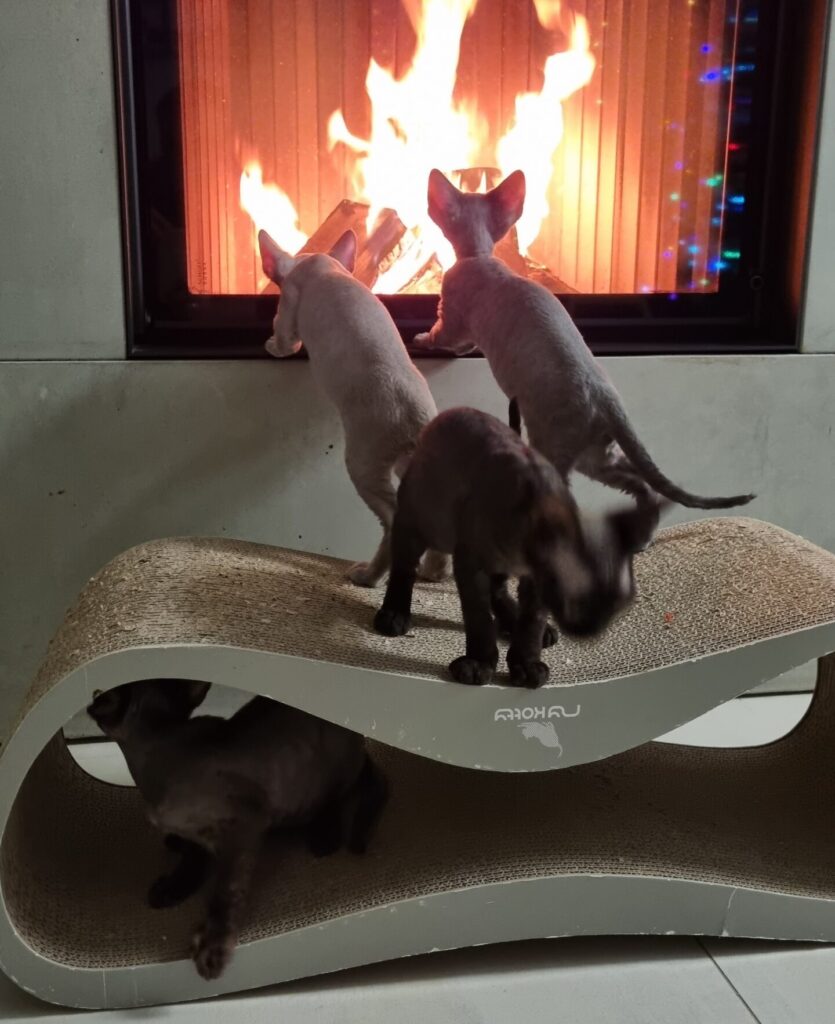
This is one of our scratching posts – the lying myKotty LUI. Slightly designer and with a place to hide.
Depending on the available space and the number of cats, it is worth choosing the one most suitable for you. Our suggestion – different cats have different preferences – there are those that like hammocks on scratching posts, and those for which they are too unstable. There are cats that like little houses, and others that avoid them. It's sometimes hard to determine what our cat will like, but it's worth observing it and seeing whether something suits it or not. And, if need be, buy more (if we have room) or replace the scratching post (if room is tight).
IMPORTANT: It is very important to have at least one a taller scratching post (or hung on the wall) so that the cat could fully straighten and stretch its front and hind legs – that is, the hind paws on the floor and the upper ones fully stretched out scratching the post higher.
If you want to buy a taller scratching post (highly advisable) then make sure it is stable, because cats do not like wobbly objects + this stability is important for their (and your home's) safety.
PS. In our home, for years now, when buying furniture we look for those with so-called cat-proof materials. These are materials with a very dense weave, which make it impossible for cats to dig in or hook their claws into them. Thanks to this our kittens also do NOT scratch furniture, because from a young age they are used to it not being possible 🙂
Cat toys
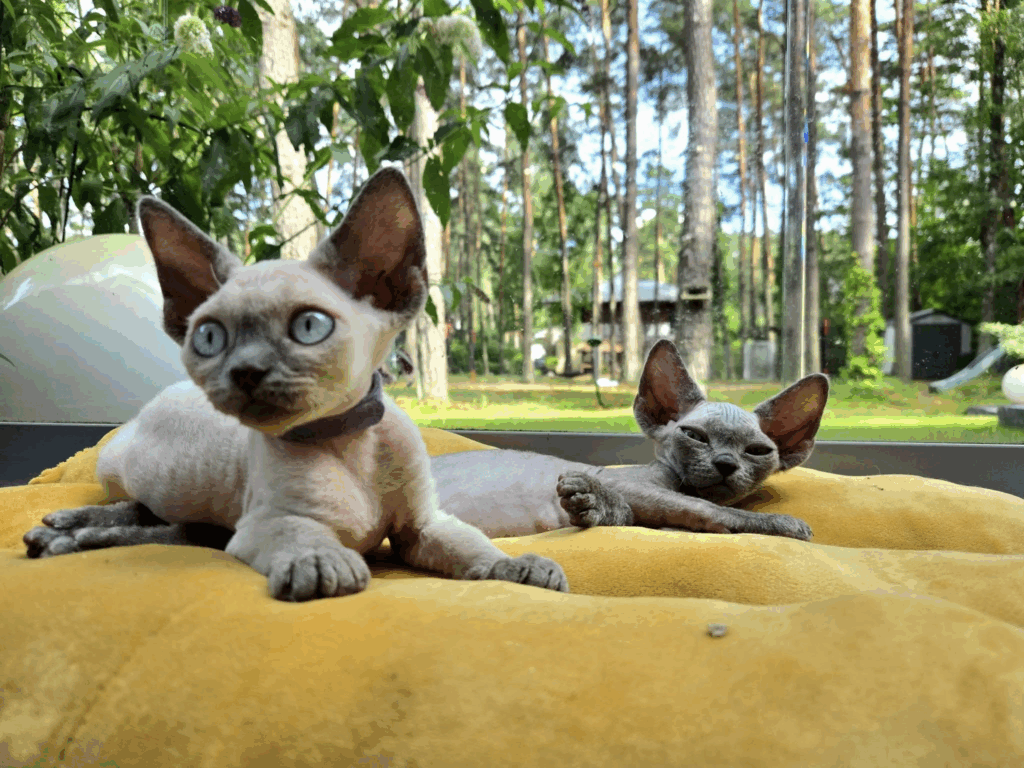
Devon Rex cats they like and are able to play with practically anything 🙂
They very much like various kinds of little balls, springs (we have these in wholesale quantities, because they often „disappear” under the fridge or bed), little mice, artificial plush fish. They happily play with fishing-rod toys. We also have a rustling tunnel for them, tracks with balls, and interactive toys – spinning toys with a butterfly or feather (battery-powered).
As cats do, they also like all sorts of little lights – especially lasers (just watch out for the eyes!), although these can be frustrating for a cat, because they cannot „catch” that prey at the end.
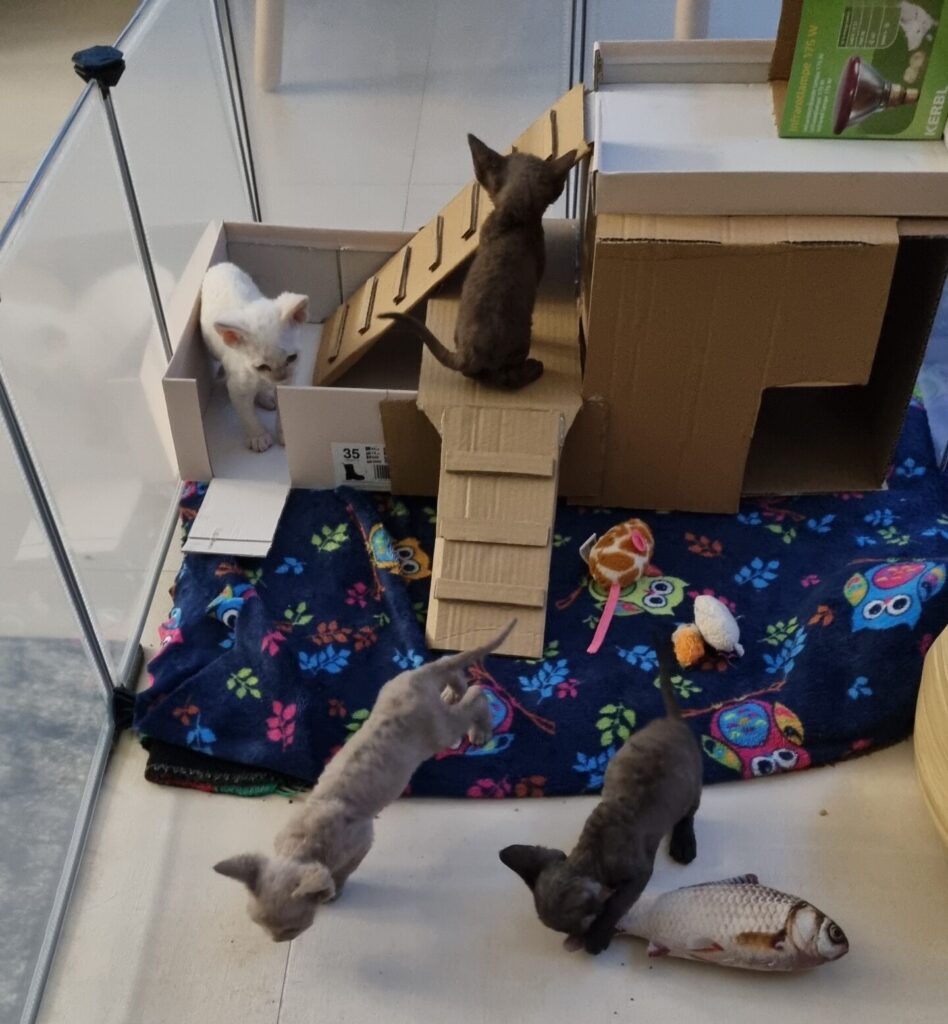
And here is an example of using cardboard boxes and hot glue – in the form of play with our daughter. The cats were delighted!
They also very eagerly use non-toys – pens lying on the table, left-out sheets of paper and cardboard, sometimes children's small toys, etc. They like to roll them about, knock them off the table or desk… as cats do 😀
Also, like many cats, Devon Rexes love… cardboard boxes. Whenever some parcel arrives to us we leave the cats the box for a few days – they like to hide in it, scratch it, squeeze through various holes (which we sometimes deliberately cut out ourselves) 🙂
ATTENTION: You will get quite a few small toys from us in the starter kit 🙂
In this category we do not have any specific products to recommend, because there are simply very many of them – in various shapes, colours, functions, types. You can, however, see the whole category Cat toys on zooplus.pl. You are sure to find something good for your little ones 🙂
A cat bed
House cats spend most of their time resting; adult cats can sleep as much as 18 hours a day! Sleep is a basic need of all animals: during the deep sleep phase the brain processes experiences and creates new neural connections. That's why it's worth having several quiet places to sleep and rest, such as cat beds, little houses or hammocks.
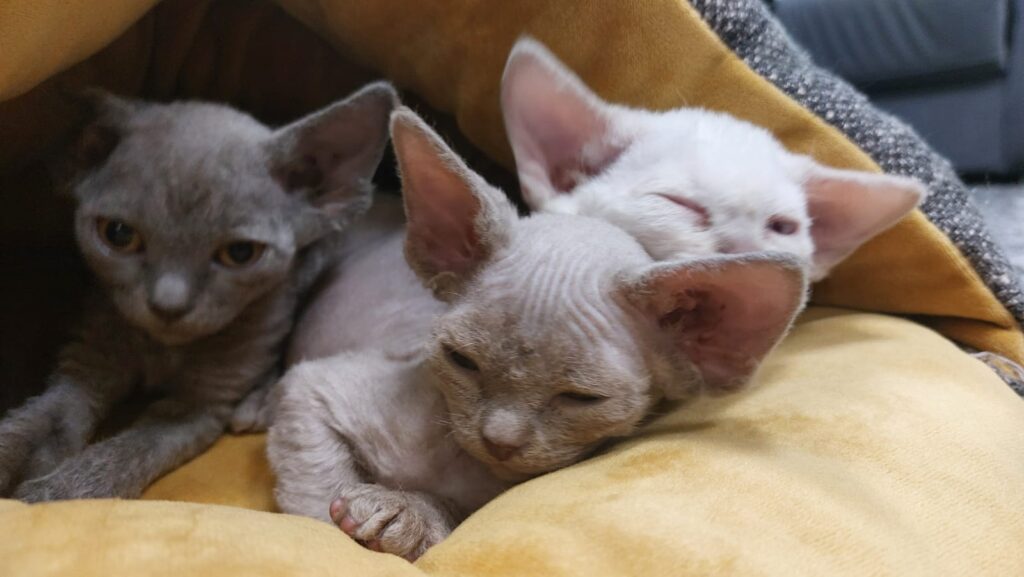
However our Devon Rexes, from an early age, are accustomed to spending time with us – so they often sleep on our various beds (including at night), on our pillows (they do not have long fur, so no tufts are left behind), or on chairs (at the table or at the children's).
But they also have various kinds of beds in our home (a bamboo house, a fabric house, dedicated cushions, beds on large standing scratching posts, etc.).
Here too we do not have any specific products to recommend, because there are simply very many of them – in various shapes, colours, textures, types. You can, however, see the entire Beds category on zooplus.pl and choose something yourselves 🙂
ATTENTION: In the starter kit from us you will get one little blanket that the little one has been in contact with from an early age and it is soaked in its scent and its mother's scent – it is worth using this blanket to get it used to the new place and not washing it too soon.
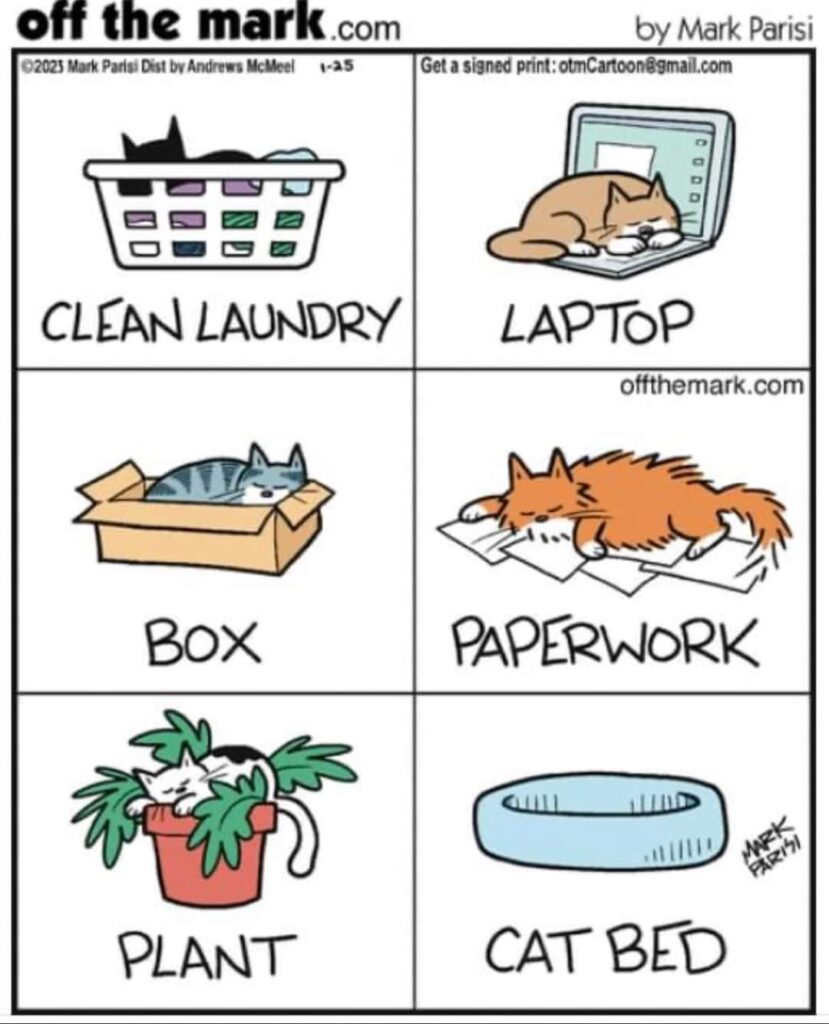
Remember, however, that no matter how wonderful a bed you find for your cat, it… will often sleep in the strangest places anyway…
However great a bed may be – it often ends up exactly like this 😀
A carrier for the cat
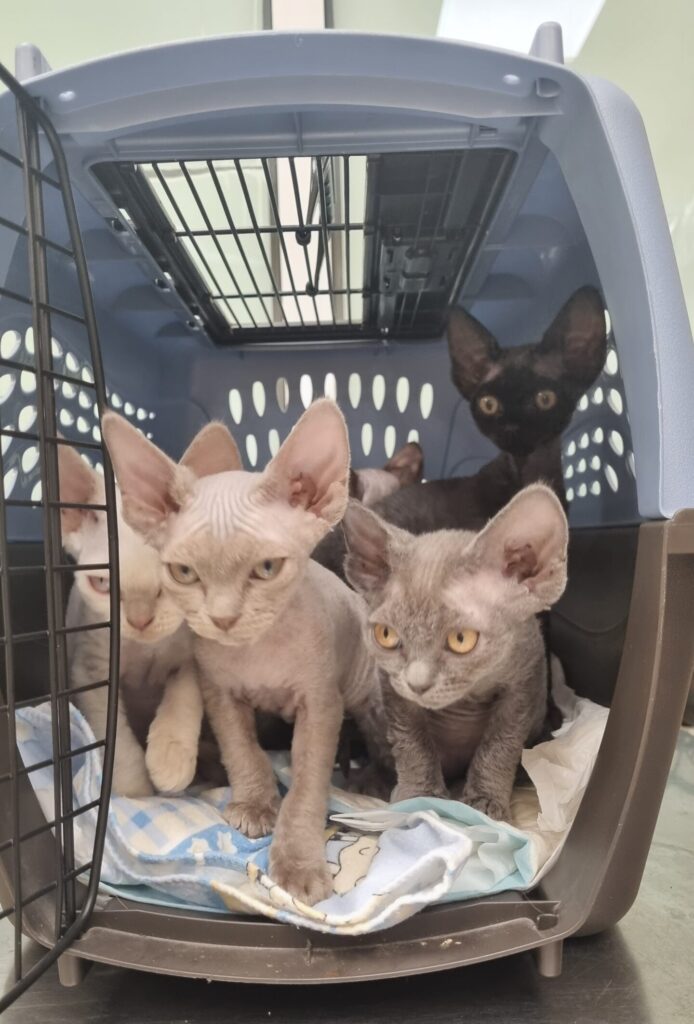
A fairly large carrier, into which five little ones went for a visit to the vet.
To to safely transport the cat (whether to the vet or for any trips, longer or shorter) you should get a carrier for the cat.
They are very varied – in the form of rigid plastic cages, in the form of backpacks with openings for cats, in the form of soft bags with mesh, wicker ones or in the form of baskets.
In our case, the ones that work best are plastic carriers, which have a rigid construction, many ventilation openings and convenient opening – both from the front and from the top (this top opening is useful especially for taking the cat out e.g. at the vet).
Inside we always put a moisture-absorbing pad (as for children or one dedicated for animals – so that in case of an accident it absorbs urine or protects against faeces) and some blanket on top of it.
We also have textile/fabric carriers – they can be pretty, light and comfortable. Especially if we are to travel e.g. by plane (with the cat on our lap), by train or on foot – their weight and size are then a big plus. However, they have their disadvantages – they do not provide protection against mechanical injuries (including cat claws), they rarely have any internal framework (that would stop it collapsing onto the cat if something falls).
Grooming – we trim the claws
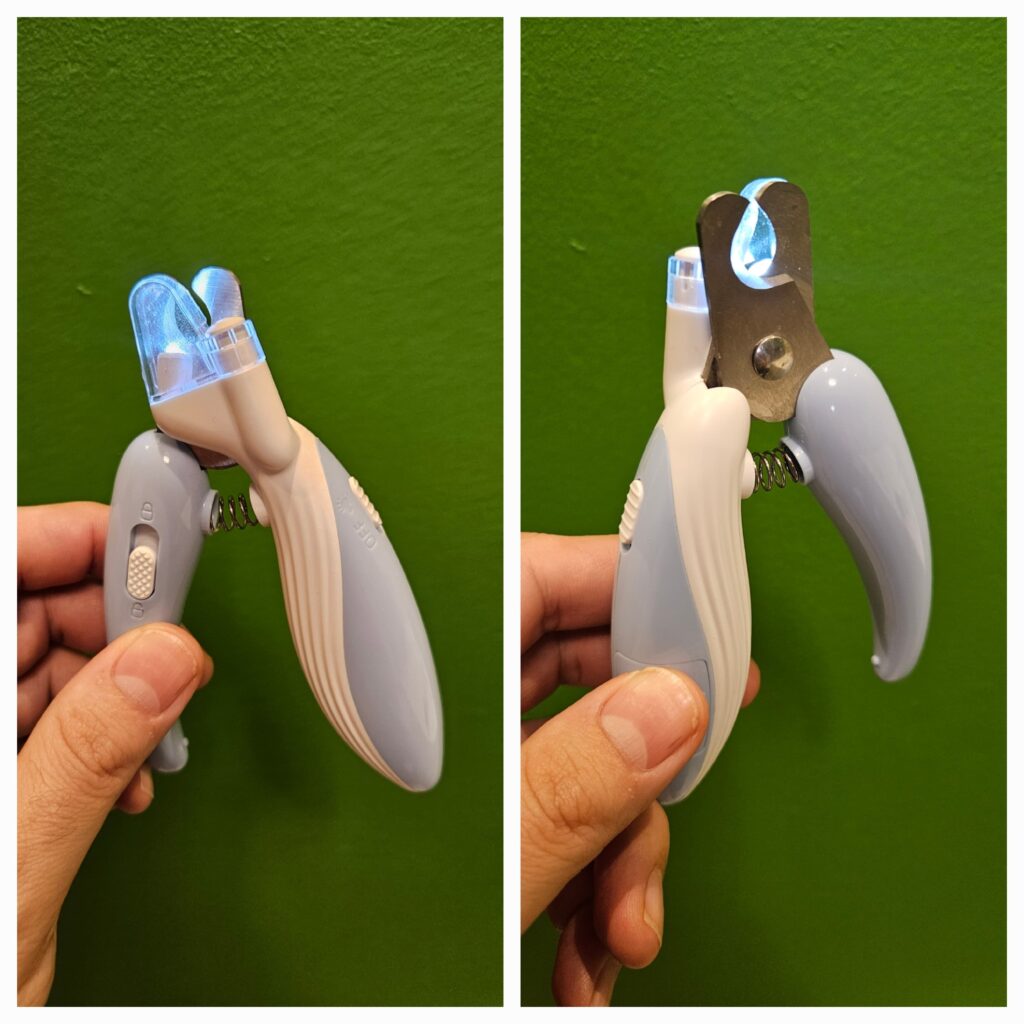
The claw clippers we use – with LED lighting and a container for the claws.
A cat's claws… Every so often they have to be trimmed. For beginner new parents this sometimes comes with difficulty and fear.
You can initially have such a grooming procedure done at your vet, but on the other hand learning it is fairly simple.
Good claw clippers are important. We use ones like these with LED backlighting (because the claw being trimmed is more visible) and a small container for claws (so that they don't shoot off and fly around the house).
But generally choose ones that you will find good and convenient to use.
(we will write more about this soon, and in the meantime you will find more information about claws on the ZooArt blog)
Other important aspects…
Apart from purchases for the cat, there are also a few very important things for new owners, which one must NOT forget, because sometimes they are even more important than those mentioned earlier…
Vaccinations and visits to the vet
As you may remember – our kittens leave the cattery after two vaccinations and after dewormings.
However, in the following years the responsibility for the kitten's health will rest on you.
And it will be with it a bit like with a child – you have to remember for it when it is time for the next vaccinationor deworming (here we suggest a conversation with your vet once you are home), or when you will need to go to the vet if something worries you. Some vets have the option of reminding about vaccinations by SMS.
It is also worth (just like with a child) going at least once a year for a check-up visit. The doctor can then examine the kitten – its ears, teeth, throat, generally its body. On this basis they may suggest certain things to you (e.g. teeth cleaning) or some more detailed examinations (if something worries them).
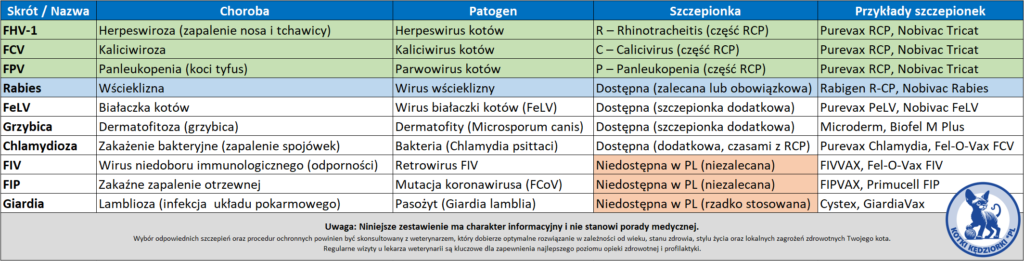
Below is a shortened summary of diseases, pathogens and available vaccines.
Hazards for the kitten at home
People who have never had a cat are often not aware of a few items of home/flat equipment that can be dangerous for our little darlings.
Interestingly, many of them are elements that are dangerous for small children, so if you have such or had them, then maybe this will not be anything new for you 🙂
It is worth knowing a few things if a feline friend is to move into our home:
Balconies/terraces we secure with netting or restrict access to them – cats can very easily fall out e.g. drawn by a bird or even a fly.
Cats like to hide in many unexpected places. It is always worth checking that the cat has not been left in the drum of the washing machine/dryer, in the dishwasher, in a drawer, in a wardrobe, in the rubbish bin…
It is worth having the habit of looking and glancing around – underfoot, onto the sofa/armchair when sitting down on it (especially when a blanket is lying on it)
We do not leave out in the open
plastic or paper bags, in which a cat can get tangled and hurt itself (in panic strangle itself or run into a wall or sharp edges)
sharp objects (needles, safety pins)
small elastics/scrunchies/ribbons/tapes – there are quite frequent situations where cats can eat them (because with their rough tongue they cannot just spit them out) and then have a problem passing them (one of our cats happened to eat our daughter's hair tie – the result – surgery and a cost of over 2000 PLN).
electrical cables (if possible) – such as extension leads, lamp cables, speaker cables, etc.
We watch out for
tilt windows – cats may want to get through and then get stuck there (in the best case it will meow and let us know so we can rescue it… but in the worst case it can do itself great harm and rupture its spinal cord)
roof windows – the cat can get out through them onto the roof
a switched-on iron, but also stoves (gas, electric, induction)
the entrance door – curious cats may really want to see what is on the other side and run away quite quickly
plants harmful/toxic to cats! Cats usually instinctively know what is bad for them and stay away from such plants… But let's still be careful if we have plants that could harm them. These species include, among others, lily of the valley, horse chestnut, poinsettia, lilies, poppy (chewing its leaves is a deadly threat to a cat), aloe, alocasia, amaryllis (again a threat to the digestive system and poisoning, vomiting, diarrhoea), palms and ferns (again a threat to the nervous system, including paralysis), mistletoe, azalea, begonias (here again heart disease, arrhythmia, breathing problems), as well as ivy, oleander, ficus, fig, yucca, dracaena, wisteria, holly, cyclamen, rhododendron, dracaena, etc.
chemicals and detergents left open or in plain sight
unstably mounted ornaments and unstable decorations that a cat can easily knock over/knock down
the stove (gas, electric, induction) – cat paws can turn on the electric ones (you can use the child lock option) or get burned if they are still hot after cooking.
As you can see – there is a bit of it. On the other hand, approach it sensibly and as with a small child. Think ahead about what bad thing could happen and prevent it 🙂
At first it can be overwhelming, but then many things become second nature to us and we do not even think about it day to day.
Short trips and leaving the cat at home
We sometimes have short trips (e.g. for the weekend). Cats, unlike dogs, have the advantage that for a day or even two they can stay home alone.
You should then take care of food for them (it is worth thinking about food dispensers – automatic or gravity ones), of course water (here there may be a challenge with its freshness, but fountains can work well) and a fresh and clean litter box.
Many times we have already left e.g. on a Saturday morning to return on Sunday evening and the cats coped without any problem staying on their own for that time (of course in the case of a cattery it looks a little different when we have little ones in our care).
The kitten in the new home…
And one more thing at the end…
✅The cats from our cattery are very strongly socialized. And it practically never happens that they have a problem in the new home. Very often after the first few minutes of caution, they start to explore the new home and start to feel at home 🙂 (many new owners write to us about them like this). This is all thanks to appropriate upbringing and socialisation – something that many catteries may not have, and into which we put a lot of time, energy, experience and effort! You can read a detailed an article on how we do it and what we pay special attention to.
✅ So far all our kittens went into their new homes VERY quickly (without hiding or lack of desire to eat and drink). Both to homes where they were on their own, and to those where there were other cats, but also to those where there were other animals (though if you have other cats/animals be sure to ask us about socialization with isolation).
⚠️ But… Some people, after buying a kitten at other catteries and bringing it to the new home is devastated. It happens that during a visit to the cattery a kitten came over, cuddled up, purred, played…
❌ And in the new home suddenly runs away and hides, cries, does not eat, does not drink, does not use the litter box, does not let itself be cuddled or even stroked, does not want to play… A tragedy. The first day is very often very difficult emotionally, when you see such behavior from a kitten.
But we will reassure you right away – there is nothing wrong with it, and our kitten has not „broken down”. It is simply still a „little child”, which has suddenly changed its surroundings quite dramatically – from a place where it had its mum, brothers, sisters and the cattery owners – it lands in a new place that it does not know at all. New smells, a new place and nooks, new people (even if we spent some time with it during the visit to the cattery).
Let's give the kitten even a few days for being distrustful, distant, hiding, not coming to us, or even a reduced appetite. It simply has to get to know this new place. With time (and each successive day) it will get better and better.
Preferably the litter tray, food and water – if possible – place as close as possible of the place where the kitten hides or has hidden. The point is for it to have it as close as possible there and not to be afraid to use it.
It is of course worth constantly encouraging the kitten to come to us. It is important that not to force it (do not pick it up, do not impose yourself on it). Rather we should leave it in peace and quiet, but you can try talking to it, try to play (e.g. with the wand from the starter kit) – but also gently and slowly. Especially if you can see that it does not want this and does not take up the play.
✅Let me remind you: Our kittens do not have such problems, but from many owners we have heard that the kittens they had from other catteries behaved exactly like that.
Of course, if anything worries you after collecting our kitten, get in touch with us, ask – that is what we are here for.
Do you have any more questions?
If you have not found here the answers to the questions bothering you, then be sure to reach out to us – we will happily answer, and the most frequently arising ones we will add on this page.