Buying a pedigree cat is not an impulse purchase – it is a decision that should be well thought out and based on trust in the breeder. After all, it is about a new member of the family! And not just for a moment, but probably for at least 15 years!
Before you decide on a particular cattery, make sure that you will receive not only a healthy and well-cared-for cat, but also full support and honest information.
How to do it? Here 10 questions, which are worth asking every breeder. And under each of them – our comment on what it looks like with us, at Kotki Kędziorki*PL.
PS. If you feel like it, also read our guide Choosing a cattery – 9 tips for future owners on how to choose a good cat cattery?
1. Does the cat have a pedigree and from which organization? When will I get it?
A pedigree is not a „whim” – it is proof of origin and documentation of a cat's ancestors, but also a guarantee that the cattery operates legally and in accordance with the rules of pedigree breeding. Also important is organisation, which issues the pedigree (belonging to the WCC – i.e. in Poland it is FPL/FIFe, WCF, TICA). And the last question on this topic – when and how you will receive the pedigree, whether it will be conditional on something (e.g. on neutering or other conditions) and whether you will actually get it in hand at collection in the original! If you want to know more about pedigrees, then read our guide Cat pedigree – what is it and why is it important?
Kotki Kędziorki: All our cats have full-fledged FIFe (FPL) pedigrees, one of the most recognisable and credible feline organisations in Europe. We always issue the pedigrees at the collection of the cat – in the original, without any conditions that have to be met.
2. When can a kitten go to a new home?
The answer is: no earlier than after completing 14 weeks of age. Only then does the kitten have time to develop correctly mentally, socially and health-wise.
Kotki Kędziorki: We do not rehome kittens earlier than in the 14th–16th week. Thanks to this they are completely independent, fantastically socialised and find their way in a new home brilliantly. Also read our guide Cat socialization – 7 key elements in practice
3. Do the kitten's parents have up-to-date tests? Which ones?
A responsible breeder carries out tests for genetic and infectious diseases and general health (e.g. CMS, FeLV, FIV). Do not be afraid to ask the breeder about this important aspect!
Kotki Kędziorki: All our cats are regularly tested. We do not breed cats with a risk of hereditary diseases. In our cattery there has NEVER BEEN ringworm, FIP (feline infectious peritonitis), FIV (the feline equivalent of human HIV), parasitic diseases (giardia, toxoplasmosis, tapeworms, roundworms); none of our cats have ever had cat flu (caused by the FHV-1 and FCV viruses), feline leukemia (caused by the FeLV virus), feline panleukopenia (caused by the FPV virus), chlamydia, or rabies.
4. Will the kitten be neutered before being rehomed?
In catteries, neutering cats kept „as pets” (i.e. not for further breeding) should be standard – it prevents uncontrolled reproduction, supports a responsible approach and prevents the creation of backyard breeding. Sometimes, unfortunately, irresponsible breeders hand over a kitten without neutering and make the transfer of the pedigree conditional on having this procedure done yourself (this is also an additional cost for the new owner + additional stress and post-operative care). For more details, we invite you to our guide: Early neutering in cats (around 14 weeks of age) – facts, safety, and why it is standard in our cattery
Kotki Kędziorki: EVERY kitten leaves our cattery after the neutering procedure. This gives the assurance that the cat will not be unknowingly bred, and the recovery proceeds calmly under our eye (with its mother and siblings). It is of course also included in the price of the cat. So we also do not make the release of the pedigree conditional on doing the neutering yourself.
5. Will the kitten be chipped and registered?
A chip is a mandatory element of a cat's identification – the chip number must also appear on the pedigree, so that we can be sure the cat we're buying is the same one we chose. Importantly – the breeder should not only implant it themselves (we know cases where a „breeder” handed the chip „into the hand”), but also to register in a nationwide (or international) database. If you want to know more read our guide Microchip in a cat – why is it worth it and what does it look like?
Kotki Kędziorki: We chip all cats at the cattery, before pickup, and the data immediately we register free of charge in the SAFE-Animal database – by default in our data, but on request also in the future carer's data.
6. Will the kitten be vaccinated and dewormed? What does the preventive care look like?
Good preventive care is essential. A kitten should have a full set of vaccinations and dewormings appropriate to its age. Most often, before being handed over, a cat should have had two dewormings and two vaccinations done (sometimes three – depending on the vet and the vaccines used). At collection you should definitely receive a health record book with these procedures entered and information about when the next vaccination should be.
Kotki Kędziorki: Our kittens receive a set of 2 vaccinations (viral) and are dewormed twice – in accordance with the veterinary calendar of our clinic. Each kitten receives health record book. On request we can also make a passport for the cat (for an additional fee) and possibly a rabies vaccination (necessary for trips outside Poland).
7. What conditions are there in the cattery? Where do the cats live?
It is worth asking (and best of all seeing) whether the cats live in the house with the family, or are isolated e.g. in a separate room or cages. It is best if the cattery shares photos, video materials and descriptions on its websites or social media.
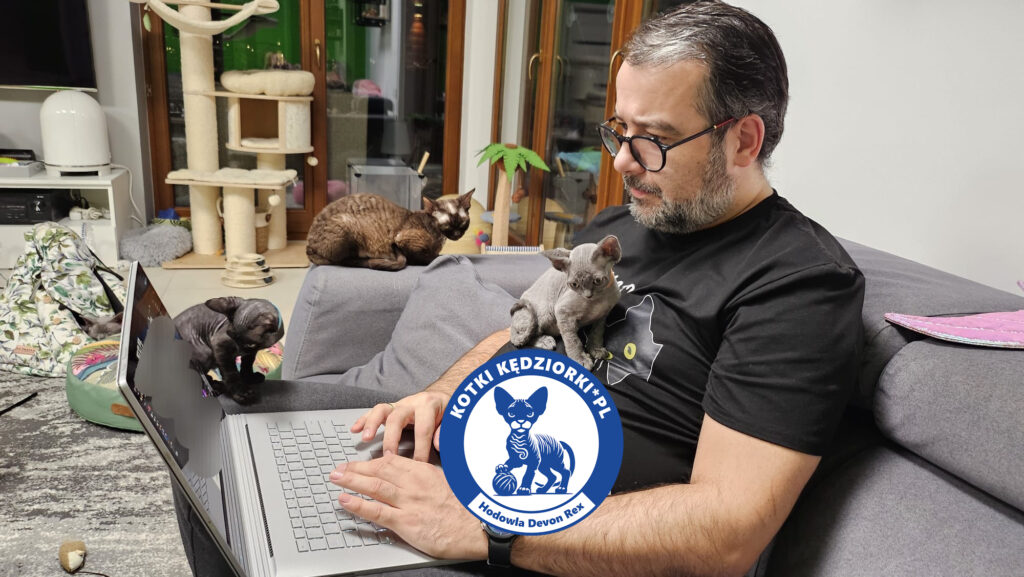
Kotki Kędziorki: Our cats live with us at home, sleep on the sofas, run around the living room and are part of our everyday life. They have access to the whole space of our home (almost 200 m2 house + 70 m2 of built-in, glass-enclosed terrace), so there is plenty of room for play and antics. But also enough space to always find a quiet place for themselves when they need it. Thanks to this, they grow up to be open, trusting, sociable cats.
8. Can you visit the cattery?
A breeder who has nothing to hide, as a rule allows a meeting with the kittens and their mum – after prior arrangement (although there are also good catteries that greatly restrict such possibilities for safety reasons). Also picking up the cat should take place in the cattery (and not in a car park or at a petrol station).
Kotki Kędziorki: For the safety of the cattery and the cats, we do not accept random visits. To people who have reserved a cat with us we regularly send photos and videos, and after vaccinations there is the possibility of individually arranging a visit.
9. What does the contract look like? What does it contain?
The contract should be clear, containing the exact details of the cat (with chip number, colour), of the breeder and of the buyer, information about health status, neutering and the obligations of both parties. The breeder should make no problem about sharing the contract in advance (and not just handing it over sight unseen for signing at collection).
Kotki Kędziorki: We are preparing a clear and transparent contract, which we send beforehand (even before the reservation and the decision!) to read. There is always room for questions and clarifications, and sometimes even for changes to the contract.
10. What support does the breeder offer after the cat is collected?
When you buy a cat from a good cattery, the relationship does not end on the day of collection! The breeder should be helpful and available in the future. They should be able to advise on any matter related to the cat and questions should start with them.
Kotki Kędziorki: We are always at your disposal – both when it comes to advice, photos, checking the state of health or even… just a simple chat about the cat!
Summary
By asking these 10 questions, you will not only check the cattery – you will also give the breeder a signal that you are a responsible and conscious owner.
A good cattery is not afraid of these questions. A good cattery even likes to answer them.
And if you want to see what it looks like in practice – come and visit us, at Kotki Kędziorki*PL.
Tags: Cattery, Pedigree, Socialization
#Cattery #Pedigree #Socialization
Other interesting posts
Devon Rex cats in the media
Devon Rexes are wonderful cats, as we say and write time and again. More and more of them are also appearing in interesting media coverage. On this page we want to gather a few interesting materials (it will be updated if something new and interesting comes up) about our breed. Here you'll find recordings (from traditional and online media) in which […] featured
20 most common myths about Devon Rex cats and the facts worth knowing
Learn the truth about the Devon Rex! We debunk 20 popular myths about these exceptional cats – from their supposed hypoallergenicity to grooming and behaviour requirements. Find out what life with a Devon is really like and what makes it the perfect companion for active owners.